
The Table
A New Tablet

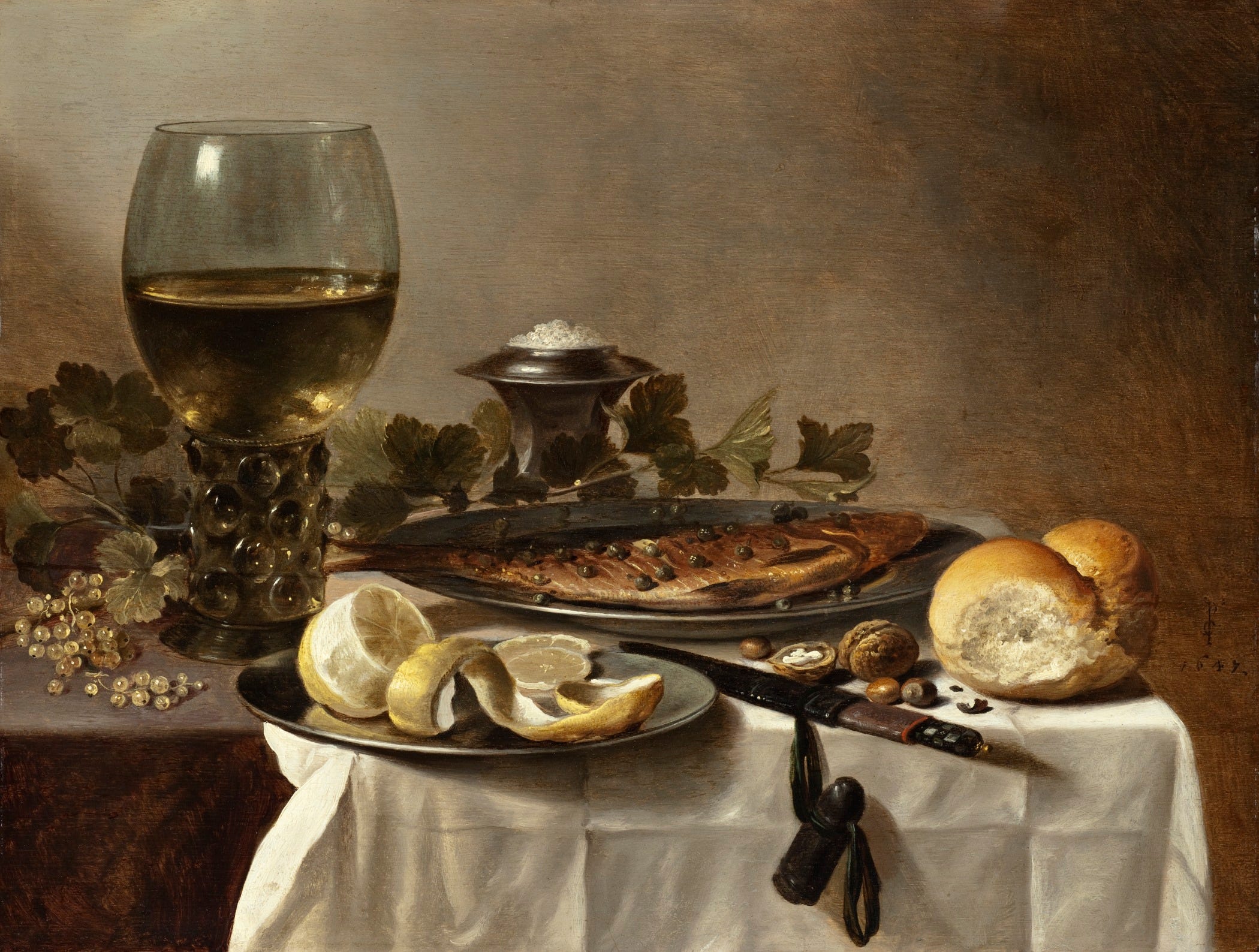
Chapter 1 — The Ground
We arrive now at the beginning that never began.
Before your mother named you. Before the schools sorted you. Before the feed told you who to hate and who to want to be. The spark was there.
It is the ground of your soul kissing the ground of all being. You did not make it. You cannot unmake it. You can only bury it under noise and call the noise your life.
The work is not construction. The work is demolition. Tear down what hides the holy. It was always there. You built a mall over it.
You have always been standing on holy ground. You were too busy scrolling to notice.
Chapter 2 — The Rupture
This is not a peace treaty between warring tribes.
Do not read what follows as a platform. Not as a policy proposal. Not as a side to take in the great sorting of peoples into camps.
Those questions assume the game is worth your soul. It is not.
When Christ came he did not caucus with the Pharisees or broker deals with the Sadducees. He did not find the sensible middle ground that reasonable men could agree upon.
He said: my kingdom is not of this world.
And their positions became small. Their factions became beside the point. Their wars became the squabbling of children fighting over who sits where while the house burns.
The new thing does not win by defeating the old. It wins by making the old irrelevant. By walking out of the colosseum while the crowd still screams.
You will be tempted to ask where this stands. Let it stand nowhere. It is not a position in the discourse. It is a way to live while the discourse devours itself without you.
What is offered here is not a way to fix the broken world. The world will remain broken. This is a way to live while it breaks.
The table is set now. The bread is here now. The community is possible now.
Not after we win the election. Not after we defeat the fascists or the communists or whatever name we give the enemy this decade. Now.
This is the rupture: to stop waiting for permission from a system that will never grant it. To receive as gift what cannot be seized as victory.
Chapter 3 — The Violence
Know this first: you carry violence within you.
Not as trauma. Not as wound inflicted from outside that therapy might heal. But as inheritance. Blood deep. Bone deep. Older than any empire that ever rose or fell.
It lived in your father and his father before him and his father before him stretching back to the first brother who looked at his brother and saw obstacle instead of kin.
Do not pretend you are above it. The progressive believes he has evolved past violence while he votes for men with drones. The conservative believes he has channeled it into virtue while he dreams of enemies destroyed. The pretending is where it hides. In the shadow of your righteousness.
Do not cast it onto enemies. Do not say: they are the violent ones. We merely respond. The casting is how it grows. The projection is the infection spreading.
Name it. Bring it into light. Give it ground where it can be spent without spilling into flesh.
The contest. The competition. The struggle with rules and handshakes after. These are not savagery. They are wisdom older than civilization. They are the channels cut into the hillside so the flood does not destroy the village.
You will not end the violence. You are not wiser than ten thousand generations who also tried. You will only choose whether it is held in vessels or whether it shatters everything it touches.
Chapter 4 — The Wanting
Know this also: your desires are not your own.
You learned to want by watching others want. The child desires the toy only when another child reaches for it. Remove the other child and the toy sits forgotten. The man desires what other men desire. Remove the audience and the wanting dissolves like morning fog.
You believe your wants are yours alone. Authentic. Original. Rising from some pure spring within. This is the first lie. The foundational delusion. Strip it away.
Watch yourself: When do you want most? When another wants the same thing. When do you stop wanting? When no one else reaches. When the thing sits there available and no one cares.
The merchants know this. The algorithms know this. They do not sell you things. They sell you the image of another who wants the thing. The influencer reaching. The lifestyle performing desire. And you, seeing, borrow the wanting as your own and call it choice.
This is the engine of endless hunger. Not need but imitation. Not lack but rivalry. You do not want the thing. You want to be the one who has it while others do not. You want the having while they want.
And here wanting meets violence.
When two hands reach for the same bread, conflict is born. When two hearts want the same glory, hatred is born. When a whole people want according to the same image, war is born. And the wanting was never even real. It was borrowed. It was performed. And now men die for the performance.
How do you step off the wheel?
Not by killing desire. The one who desires nothing is dead already. Walking corpse. Empty eyes.
But by fixing desire on what cannot be fought over. On what is not scarce. On what is not made less by sharing.
The holy is not a limited good. The ground of being is not a prize with one winner. The spark within you is not taken from another’s store.
When your deepest want is aimed at what cannot be hoarded, rivalry loses its root. You may still want bread—want it, work for it, eat it with pleasure. But the wanting does not own you. It is not final. It is not who you are.
The saints were not without desire. They burned with desire. They were consumed by wanting. But the thing they wanted was endless. They could want it with all their strength and make no enemy, because the wanting itself was the having.
The bread on the table is divided and becomes less. Each mouth means less for other mouths. The presence at the table is shared and becomes more. Each soul means more for other souls.
Learn to want the second kind of thing. Or remain forever hungry fighting over crumbs.
Chapter 5 — The Powers
Know this also: your fight is not against flesh and blood.
The soldier can be bribed or killed. By morning another wears his uniform. The thing that makes soldiers does not notice the substitution.
The king can be overthrown. The revolutionaries can storm the palace and drag him through the streets. The thing that makes kings continues. It was there before him. It will be there after. Wearing new clothes. Speaking new slogans.
The one who kills the king becomes the king. Always. Without exception. The one who captures the temple is captured by it. The prophet who speaks against the power finds power speaking through him before the generation turns.
This is the mystery of the powers: they are not persons, yet they act. They are not alive, yet they do not die. They have no body, yet they shape all bodies within their reach. They have no mind, yet they think through every mind that serves them.
Call them what you will. Systems. Structures. Principalities. Egregores. The name matters less than the seeing.
You see the face of your enemy and think: if I defeat him, I am free. But behind the face is a thing without face. And it waits. Patient. Eternal. Amused.
This is why the children of revolution are devoured by what they birthed. They aimed at flesh. The power was not flesh. When the blood dried and the speeches ended, it returned wearing their faces. Speaking their words. Betraying everything they died for.
Do not spend your strength on persons. They are not the enemy. They are—like you—caught in the gears. Screaming. Reaching. Believing themselves free while the machine moves them.
The enemy has no throat to cut.
How then do you fight what has no body?
You do not fight it. You starve it. You withdraw the food of your attention. You build elsewhere—small, near, with hands that touch and faces that know your name—and you do not feed the beast.
The table is not a battle. It is another way. The community is not a war. It is a quiet leaving. A desertion so gentle the empire does not notice until the legions are empty.
The powers feed on your attention and your anger. Every moment of outrage is a meal. Every fantasy of victory is a chain. Your hatred makes them stronger. Your need to defeat them chains you to them more surely than any love.
Turn away. Build elsewhere. Let the dead bury the dead.
The powers are real. But they are not forever. They rise and fall. Babylon falls. Rome falls. The British Empire falls. The American order falls. Every empire exhausts itself. Every system runs down. Every beast eventually starves.
What remains is the table. What remains is the bread. What remains is the people who did not sell their souls to fight on the enemy’s ground.
Your fight is not against flesh and blood. Remember this when you want to hate a face. The face is not your enemy. The face is another prisoner. Staring at you through the bars. Believing you are the jailer.
Hate the prison if you must. Better yet: stop believing in its walls.
Chapter 6 — The Words
Know this also: your words shape what you can see.
The tongue you speak becomes your eyes. The words you have determine what you can think. The thoughts you cannot form cannot disturb your sleep.
And the tongues of this age have been worn—not by conspiracy but by slow forgetting—until certain thoughts can no longer form in mouths trained to speak them.
The merchant says: “We regret any inconvenience caused.” He cannot say: “We failed you. We wronged you. We are sorry.” The words will not come. The shape is not in his training.
The therapist says: “I notice I am experiencing hurt.” She cannot say: “You wronged me. Repent.” The mouth refuses. The tongue rebels.
Speak a tongue long enough and you lose what the tongue cannot hold. The unspeakable becomes the unthinkable. The unthinkable becomes the nonexistent.
And here is the danger: the new tongues have lost the words of the soul.
Sin. Repentance. Forgiveness. Evil. Sacred. Damnation. Grace.
These words sound old to ears trained on new tongues. They sound crude. Unsophisticated. Like relics from museums. Embarrassing at dinner parties.
But they held thoughts the new words cannot hold.
“Sin” is not “wound.” A wound happens to you. Sin is what you do. The word wound cannot hold your fault. The word sin can. Kill the word sin and you kill the possibility of acknowledging what you are capable of.
“Forgiveness” is not “healing yourself.” Healing yourself is alone. A project. An achievement. Forgiveness requires another. Costs something. May not be earned. Cannot be demanded. The word healing cannot hold grace. The word forgiveness can.
“Evil” is not “harm.” Harm is a problem to manage. A variable to minimize. A policy issue. Evil is a darkness to resist. A reality to face. A name for what men do to each other when the thin veneer cracks. The word harm cannot hold the weight of the camps, the gulags, the killing fields. The word evil can.
The old words were not simple. They were strong. They carried what the new words cannot lift. They held truths too heavy for modern tongues.
Keep the old words. Say them even when they feel strange in your mouth. Say sin. Say repentance. Say sacred. Say evil. Say grace.
Read the old texts not only for what they say but for how they say it. Let their tongue reshape your mouth. Let your mouth reshape your mind.
The prayers are not empty repetition. They are not vain recitation. They are keeping alive what would otherwise die. Seeds stored against a long winter.
When you say “forgive us our debts as we forgive our debtors,” you are keeping alive a way of seeing—debt, and release, and the release that must be given before it can be received.
The new tongues cannot hold this. They can only dissolve it into self-help and boundary-setting and healthy processing.
But there is something beneath all tongues.
The mystics reached for it. They said: where the word ends, there God begins. They said: the highest cannot be spoken, only indicated. Only gestured toward.
From that ground, you can see the bars of language. You can notice when words are doing your thinking for you. You can reach for what the tongue forbids.
The spark within you is not a word. It is what words try and fail to name.
Stand there. Speak from there. And when the new tongue tells you the old words are crude, remember: it is the cage calling the sky a ceiling.
Chapter 7 — The Wheel
Know this also: time is a wheel.
Your children will forget what you learned through suffering. Their children will learn it again through suffering. This is not failure. This is the rhythm. The heartbeat of generations.
The son always leaves. He must leave. The father always waits. He must wait. The inheritance is always wasted. It must be wasted. The return always comes. In time. Always in time.
The prodigal is not an aberration. The prodigal is the pattern.
You are not building for forever. You are building for three generations, and then releasing what comes after. Clenched fists cannot bless.
Those who build know why they build—they faced the emptiness. They stood at the edge of the abyss and understood why walls exist.
Those who inherit do not know—they received without cost. They live inside walls whose purpose they never learned.
Those who inherit grow suspicious of what they never earned. The walls feel like prisons. The traditions feel like chains. They tear down. They must tear down. Their children face the emptiness.
And build again.
And tear down again.
And build again.
Do not rage against the wheel. It will not stop for your rage. Plant the vineyard knowing it may be uprooted. Love the temple knowing it may burn. Build the city knowing it may fall. It was always so. It will always be so.
The only failure is refusing to build because building does not last. Everything does not last. Build anyway.
Chapter 8 — The Forming
The world tells you: the inside is what matters. The outside is just expression. What you really believe lives in your heart; what you do with your body is secondary.
This is the lie that makes all other lies possible.
You do not have an inside that then expresses itself outside. You are formed by what you do. The exterior molds the interior. The body teaches the soul.
The martyrs understood this. Rome asked only for a pinch of incense. A formality. A gesture. What does it matter what the hand does if the heart remains faithful?
But they knew: the hand that offers the incense becomes the hand of one who offers incense. The small betrayal is not small. It is the first cut of the chisel.
You become what you practice. You become what you repeat. The scroll reshapes the mind that scrolls. The genuflection reshapes the body that kneels. There is no neutral action. Every motion is formation.
This is why the practices matter—not because they earn anything but because they make you. This is why the boundaries matter—not because the forbidden is powerful but because repetition is.
The feed seems harmless. One scroll. One click. One compromise. But you are being carved. Slowly. Daily. Into the shape of what you repeatedly do.
The one who kneels daily is becoming a kneeler. The one who fasts is becoming free from hunger. The one who keeps the table is becoming the kind of person who keeps tables.
And the one who offers the pinch of incense—just once, just to get along—is becoming the kind of person who offers incense.
There are no small acts. There is only formation.
Chapter 9 — The Practices
You will fast.
Not to punish the body but to remember you are not your hunger. The one who has never said no to appetite is a slave to every craving that presents itself. Freedom begins with no.
The feed never stops. The content never ends. The stimulation never ceases. You will fast.
You will keep the Sabbath.
One day in seven, you will stop. You will not produce. You will not optimize. You will not improve yourself or your position or your metrics.
You will sit in time like a child in his father’s lap—not because you have finished the work but because finishing is not the point. Not because you have earned the rest but because rest is not earned.
The market never stops. The hustle never sleeps. The grind continues forever. You will stop.
You will say the old words.
The prayers worn smooth by ten thousand tongues before yours. The shapes in the mouth of the dying and the dead. You will say them when you do not feel them. Especially then.
The words carry you when you cannot carry yourself.
You will confess.
You will name what you have done and failed to do. Not to explain. Not to contextualize. Not to add “but I was wounded” or “but they did it first.” But to say: I did this. I am at fault. I have sinned.
The unnamed sin festers in darkness. The named sin begins to heal in light.
You will bind yourself in vows.
You will make promises you cannot fully keep and mean them anyway. You will close doors. When it is hard—and it will be hard—you will stay.
The world dissolves all bonds. Calls them prisons. Celebrates the exit. You will bind.
You will become kin to children.
By birth, by adoption, by the slower adoption of presence and years. You will bet your body on the future. You will give hostages to time and call it hope. You will become vulnerable in ways that cannot be undone.
The prudent keep their options open. The wise close them.
You will join yourself to a people you did not choose.
Not a brand community. Not a follower count. Not an audience. A place. Bodies in rooms. Faces that know your face. You will be known. You will be needed. You will be interrupted. You will be inconvenienced. You will show up when you do not want to.
The screen offers belonging without cost. Connection without presence. Community without commitment. You will pay the price of flesh.
You will keep the meal.
The table is the altar. The breaking of bread is the oldest rite. Older than temples. Older than scriptures. You will eat together and remember what you are. You will become human, together.
You will read the old texts.
Not because they are perfect but because they are old, and what survives contains what the new has not yet earned. The dead have something to say. Listen.
Chapter 10 — The Boundaries
You will keep boundaries, for the outer shapes the inner.
The walls you build determine what can grow inside them. A garden without fence is a field. A self without limits is a void. Meaning requires boundaries. Boundaries require exclusion. A door that opens to all opens to nothing. A covenant with everyone is a covenant with no one.
On what you see: guard the eye. What enters through the eye takes root in the mind. The pornography of outrage. The pornography of flesh. The pornography of lifestyle aspiration. Be careful what you let in. The eye is not innocent. The eye is hungry.
On what you say: guard the tongue. The lie rots the liar from within. Gossip poisons the gossiper before it reaches the victim. And some things are sacred because they are not spoken. Not everything bears exposure to air.
On what you drink: the wine at the table, not the bottle in the dark. The fast before the feast. The discipline that makes the celebration possible.
On what you keep: enough is a word. Learn it. The hunger for more has no end; you must make one. Practice letting go before letting go is forced upon you. The grave takes it all anyway.
On what you give your hours: attention is life. Where your attention goes, your life goes. The feed will take everything and return nothing. You must set the limit. No one will set it for you.
These are not chains. They are the shape of a life that can hold the holy.
A river without banks is a swamp. A self without limits is a void.
And yet.
This is our tragedy—not our triumph. The household feeds its children before it feeds the street. The family that gives everything away has nothing left to give. But the moment we call this wisdom rather than wound, we have lost the plot. The moment we feel satisfaction in our walls, the walls have become idols.
Our own traditions teach us to distrust our boundaries. In every story worth telling, the hero is the outsider. The heretic. The one beyond the wall. The enemy soldier shows more honor than the priest. The stranger at the gate may be the holy in disguise. I was hungry and you gave me nothing to eat. I was a stranger and you did not welcome me. This is the judgment that waits for those who love their walls too much.
The pattern is not boundary or openness. The pattern is: boundary, then crossing. We hold walls knowing we may be called to violate them. We keep the gate knowing we may be demanded to open it to the one we least want to admit.
And when that call comes—if it comes—we obey in fear and trembling. Not in satisfaction. Not in self-congratulation. Not posting about our hospitality. But in the terror of one who knows the cost and pays it anyway.
The one who keeps no boundaries has nothing to sacrifice. The one who worships boundaries will not sacrifice when sacrifice is required. Hold the wall. Be ready to tear it down. Both. Always both.
Chapter 11 — The Grace
But know this: the practices do not earn what cannot be earned.
You cannot work your way to the holy. You cannot hustle your way to grace. The striving itself can become another obstacle. The discipline itself can become another pride.
The practices clear the ground. They do not make the rain fall. They prepare the soil. They do not make the seed grow.
There is a weight that pulls all things toward force—the strong over the weak, the clever over the simple, the ruthless over the merciful. This is the way of the world when nothing else enters. Gravity. Entropy. The strong do what they can and the weak suffer what they must.
But something else enters.
Call it grace. Call it gift. Call it the thing that should not be but is. It does not follow the laws of force. It cannot be seized. It cannot be manufactured. It cannot be earned.
It comes where there is emptiness to receive it. And here is the paradox: it is grace itself that makes the emptiness. Even the openness to receive is given.
You did not earn the spark within you. You did not make the ground beneath your feet. You did not create the way back from where you have wandered.
These were given. They are still being given. The giving does not stop.
Your work is only to stop refusing the gift. To unclench the fist. To open the hand. To receive what is already being offered.
Chapter 12 — The Letting Go
And now the hardest teaching. Harder than fasting. Harder than staying. Harder than any discipline.
You have built. You have practiced. You have kept the bounds and said the words and bound yourself to others. Good. Necessary.
Now let it go.
Not the work—the outcome. Not the love—the clutching. Not the way—the worship of the way.
The one who grasps, crushes. The one who clings, corrupts. The one who cannot let go becomes a dead hand on a living throat. The father who cannot release becomes the tyrant. The institution that cannot die becomes the tomb.
Your children may abandon everything you built. The temple may become a ruin. The vineyard may be plowed under and the land salted. The tradition may be forgotten. The name may be lost.
This is not failure. This is the way of all living things. The seed must die to become the tree. The tree must die to become the soil. The soil must give itself away to feed new seeds.
Build as if it matters forever. Hold it as if it may end tomorrow. Both at once. The paradox is the point.
Open your hands. What stays, stays. What goes, goes. What dies, dies—and rises in forms you cannot know, or does not rise, and that too is enough.
This is not despair. The one who despairs says nothing matters because nothing lasts. The one who lets go says everything matters so much that he dare not crush it with his clutching.
Die to dying while loving living. Build while you laugh. Care completely while holding loosely.
The paradox cannot be resolved. Only lived.
Chapter 13 — The Death
You will die.
Perhaps something waits on the other side. Perhaps nothing. Perhaps something unimaginable to minds built for this world.
We do not know. We have never known. Those who claimed certainty were offering comfort, not truth. The honest prophets stammer.
But this we have seen: clinging to life makes ugliness, and releasing it makes beauty.
The death before death—the releasing of outcome, of name, of the need to continue, of the desperate grasping after one more day, one more achievement, one more proof that you mattered—this is freedom. This is what the mystics meant by dying before you die.
And when the final death comes, it finds nothing to take that has not already been given. It finds hands already open. It finds a life already released.
This is enough. This has always been enough.
To love without owning. To give without calculating return. To build without grasping at permanence. To live fully and then to stop.
The flowers do not rage against autumn. They do not petition for one more season. They do not write op-eds against the frost. The wave does not mourn its return to the sea. It was always the sea. It only forgot for a moment.
You are not wiser than the flowers. You are not more lasting than the wave. You are not exempt from the turning.
Let go. Let go. Let go.
Chapter 14 — The Table
Here is bread. Here is wine. Here are faces.
The table does not argue. It does not prove. It does not explain itself or justify its existence or demonstrate its relevance to modern concerns.
It is simply here, and you are simply here, and for this moment that is enough.
The bread is broken. The wine is poured. The words are said—the old words, worn smooth by ten thousand generations, carrying you when you cannot carry yourself.
Outside this room the feed continues. The outrage machine grinds on. The market never sleeps. The wheel turns. The violence waits. The powers feed.
But here, now, for this hour: rest.
You did not earn this moment. You cannot hold it. You cannot photograph it and keep the reality. You cannot livestream it without losing what makes it holy.
It is given, and it passes, and it is given again.
This is the pattern: gift, and release, and gift again. It does not end. Even death does not end it, for the pattern is larger than any life. Larger than any death.
You are a breath in a breathing that does not stop.
You are a wave in a sea that does not cease.
You are a word in a sentence still being spoken.
You are not the speaker. You are not the sea. You are not the breath. But you are part of it. And that is enough. That was always enough.
Chapter 15 — The Invitation
Come to the table.
Not because you have proved it right. Not because you have figured it out. Not because you have measured its utility or calculated its ROI or compared it favorably to the alternatives.
But because you are hungry, and here is bread.
Because you are thirsty, and here is wine.
Because you are alone in the crowd of millions, and here are faces that know your face.
Because you are dying—have always been dying—and here is life. Not promised to last. Not guaranteed to continue. But present now. In this room. At this table. With these hands breaking this bread.
The spark was always there. You did not earn it. You could not destroy it. You only buried it.
The ground was always beneath you. Holy ground. You were too busy to notice. Too distracted to remove your shoes.
The grace was always near. Closer than your breath. Nearer than your heartbeat. You had only to stop refusing.
Come and see.
The table is set. The bread is broken. The wine is poured.
The dead are not dead. The lost are not lost. The far country is not as far as you think.
Come home.
Amen.
Chapter 16 — A Rule of the Table
What follows is a shape, not a law.
Adapt it. Break it when the breaking is demanded. But start somewhere. The one who waits for the perfect rule never begins. The one who perfects the rule has already missed the point.
This is a trellis. The vine is not the trellis. But without the trellis, the vine sprawls in the dirt.
The Table
Once a week, you will gather. Same people. Same time. A meal prepared and shared.
Before you eat: give thanks. Not to no one. Not to the universe. To whatever name you can speak without lying. Two sentences are enough. One is enough. Silence held together is enough.
Before you eat: bless. The food. The hands that made it. The lives that will eat it. Speak it or hold it in silence together.
Then eat. Talk. Linger. No phones. No screens. No background noise from machines. Faces and voices only. Stay longer than is efficient.
Once a week. Same people. This is the anchor. Everything else hangs from this.
The Fast
The fast teaches you that you are not your cravings.
One hour a day: no feed. No news. No buying. No selling. No content. Let the mind go hungry. Sit in the discomfort. Notice how loud the craving screams. Notice that you do not die when you refuse it.
One day a week: eat simply. One meal or two. Plain food. No performance. No optimization. Let the body remember that it can go without. Let hunger visit so you know its face and stop fearing it.
The fast is not punishment. The fast is a clearing. You cannot hear anything in a room that never falls silent. You cannot know what you need until you stop feeding what you merely want.
The fast says no. No to the appetite. No to the craving. No to the voice that says you will die without the next hit of content, the next bite, the next purchase. You will not die. You will wake up.
The Sabbath
The Sabbath teaches you that you are not your productivity.
One day in seven: stop producing. But this is not another fast. This is a different yes. The Sabbath is not deprivation—it is presence. It is finally paying attention to what the hustle made you too busy to see.
Feast if you feast. Linger over a long meal. The Sabbath is not about going without. It is about going deep. Slow food. Slow talk. Slow walks with no destination.
No commerce. No self-improvement. No inbox. No content consumed or created. Not because you are denying yourself but because these were never the point. They were distractions dressed as necessities.
Read words written by the dead. Cook with your hands. Visit bodies in rooms. Sing if you can sing. Make love. Nap without guilt. Sit in silence and let the silence sit in you.
The Sabbath is not a reward for finishing. You will not finish. The Sabbath is a declaration: I am not my output. I do not earn my existence. I am allowed to stop.
The market will call this laziness. The market needs you to believe that your worth is your productivity. The market is lying. It has always been lying. The Sabbath is how you remember the truth.
The Boundaries
No phones at meals. None. Not face-down on the table. Not in the pocket on vibrate. Gone. In another room. The meal is not optimized by information. The meal is the point.
No outrage at the table. The feed wants you to bring its poison into your house and call it being informed. Do not. The enemies you have never met are not welcome at your table. Speak of what is present. Speak of what is real. Speak of what you have seen with your own eyes and touched with your own hands.
No gossip. Not even the righteous kind. Not even about people who deserve it. Gossip is a parasite that feeds on the absent. It will feed on you when you are absent. Starve it.
These boundaries will feel extreme. They are not extreme. They are minimum. The disease is extreme. The medicine must match it.
The Vows
If you would join this way, say these words. Say them alone. Say them together. Say them once. Say them until you mean them.
I will not speak of people as enemies. The face is not my enemy. The face is another prisoner.
I will not let the powers buy my attention with outrage. My attention is my life. I will not sell it for the pleasure of being angry.
I will keep the table. When it is inconvenient. When I am tired. When I would rather scroll. I will show up. I will break bread. I will stay.
I will hold my boundaries knowing I may be called to cross them. In fear and trembling. Not satisfaction.
I will build knowing it may not last. And I will let go before my hands become a dead grip on a living throat.
I will die before I die. So that when death comes it finds nothing left to take.
These are words. Words are not the thing.
The thing is the table, tonight, with faces you know. The thing is the bread in your hands. The thing is showing up again next week, and the week after, and the week after that, until showing up is who you are.
Start somewhere. Start small. Start today.
The rest will come, or it will not, and either way: the table is set, and you are welcome, and there is bread.
Come and eat.