
Education Cannot Save Us

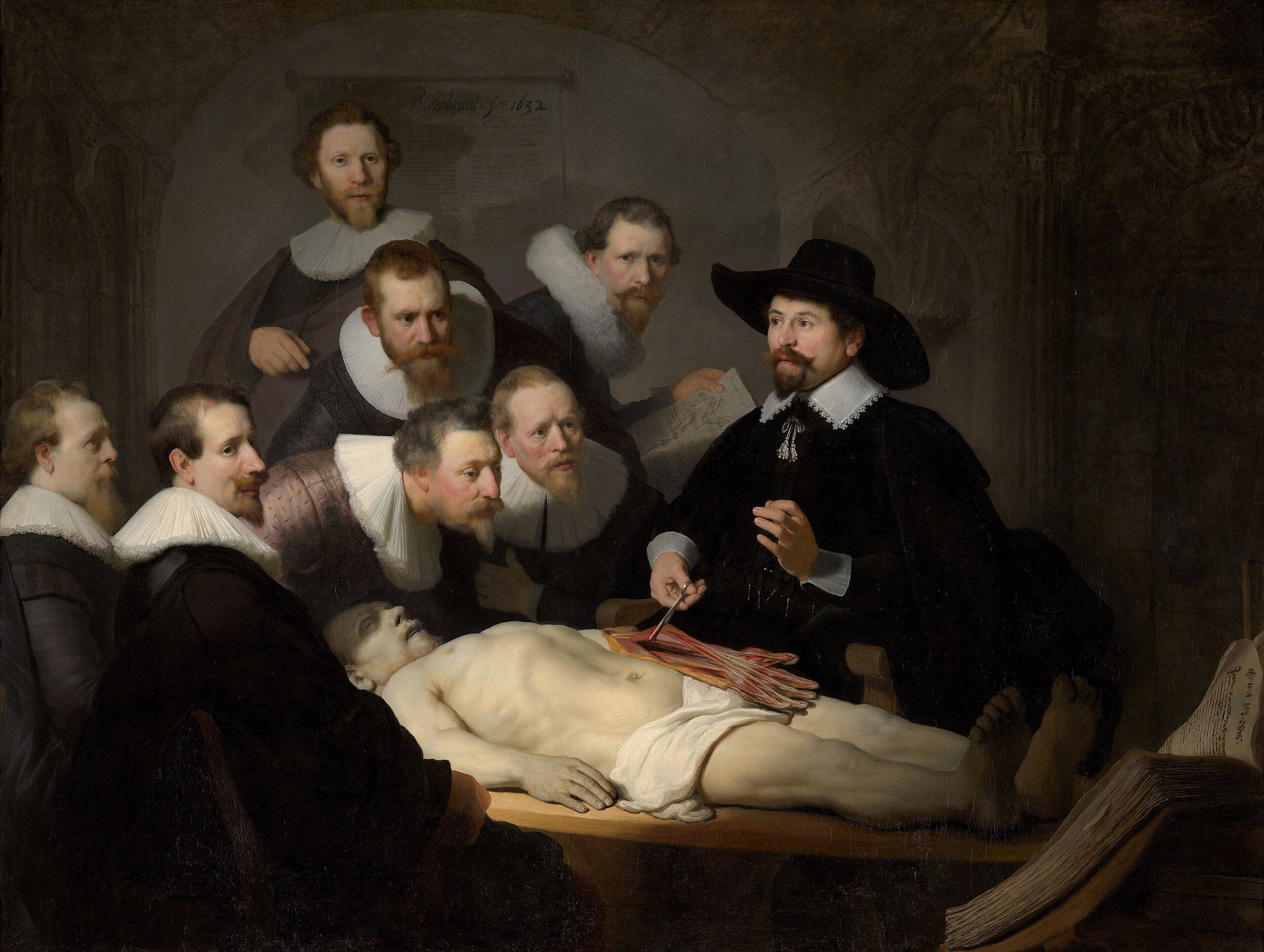
This is the abyss that education cannot cross. You can teach someone the arguments for equality. But someone else can teach the arguments for hierarchy—and reason alone cannot adjudicate between them. You can teach compassion as the highest virtue. But someone else can teach it as weakness, as the resentful cope of those who could not win—and logic will not settle the dispute.
There is a faith shared across the political spectrum, so deeply held it is rarely examined: that the problem is ignorance, and the solution is education.
The progressive believes that racism persists because people haven’t been taught about systemic oppression, implicit bias, the history of redlining. Educate them, and they will understand. Understanding will change behavior. Changed behavior will produce justice.
The conservative believes that poverty persists because people haven’t learned the values of hard work, deferred gratification, personal responsibility. Educate them, and they will make better choices. Better choices will produce prosperity.
The technocrat believes that bad policy persists because people don’t understand the data, the research, the expert consensus. Educate them, and they will support the right policies. The right policies will produce progress.
All of these share the same underlying structure: if only people knew what we know, they would believe what we believe, and then they would do what we want.
This is the Enlightenment’s central promise. Reason will set us free. Knowledge will dispel superstition. Education will produce virtue.
It is a beautiful dream. And it is false.
The Contrarian Problem
Start with the simplest objection: some percentage of humans will resist whatever is being taught precisely because it is being taught.
This is not stupidity. This is not irrationality. This is a heuristic—and often a useful one.
When someone pushes an idea insistently, a reasonable question is: why? What do they gain from my belief? What am I being recruited into? The used car salesman who won’t stop talking about reliability makes you wonder about the transmission. The regime that mandates ideological education makes you suspect the ideology.
The harder you push, the more you trigger this response. Mandatory training produces backlash. “Torture the data until it confesses” produces skepticism about all data. The voice that insists you must believe something is the voice that makes belief difficult.
This is why propaganda works best when it doesn’t look like propaganda. This is why the most effective ideological capture happens in institutions that claim to be neutral—universities, newspapers, professional organizations. The explicit sermon is easy to resist. The assumption baked into the curriculum is not.
But notice what this means: education as intervention—education designed to change beliefs and behaviors—is self-undermining. The very act of trying to educate someone can immunize them against the lesson. The contrarian says: if you need to teach me this so badly, perhaps it isn’t true.
The Groundlessness
Now go deeper.
Every educator is a product of education. The teacher was taught by teachers who were taught by teachers. The curriculum was designed by people formed by curricula. There is no view from nowhere—no position outside all traditions from which to deliver uncontaminated truth.
This applies to any educational project. The progressive educator transmits progressive premises. The conservative educator transmits conservative premises. The “neutral” educator transmits the premise that neutrality is possible and desirable—which is itself a contestable position.
No one escapes their own formation. The claim “we should teach critical thinking” already embeds assumptions about what counts as critical. The claim “we should just teach the facts” already embeds assumptions about which facts matter and how to frame them. You cannot educate someone out of their formation into a formation-free state. You can only educate them into a different formation.
But there is something worse. It is not merely that educators are biased. It is that the values themselves—the very things education hopes to transmit—have no rational foundation.
Every value can be stood on its head and defended with equal logical force.
Care for the weak? Why not celebrate the strong? Nietzsche saw that Christian morality was itself an inversion of Roman virtue—the weak calling their weakness good and the strength of their masters evil. But the inversion was just an inversion. Neither has logical priority.
All men are created equal? Self-evidently false, if we’re speaking of capacities, talents, circumstances. Jefferson’s “self-evident truth” is evident only to those who already hold it. The aristocrat finds hierarchy equally self-evident.
Follow nature? But what is natural? The natural law theorist says one thing, the progressive another, and the transhumanist says the whole point of humanity is to transcend nature. The word does no work. It is a placeholder for “what I already approve of.”
Maximize human flourishing? Whose flourishing? Measured how? Over what time frame? By whose definition of flourishing? Every parameter is a concealed value judgment. The utilitarian has not escaped the problem of values—he has only hidden it inside his definitions.
This is the abyss that education cannot cross. You can teach someone the arguments for equality. But someone else can teach the arguments for hierarchy—and reason alone cannot adjudicate between them. You can teach compassion as the highest virtue. But someone else can teach it as weakness, as the resentful cope of those who could not win—and logic will not settle the dispute.
The axioms go all the way down. And at the bottom, there is no proof. There is only seeing—or not seeing. Moral perception, or its absence. And that cannot be taught.
This is why education produces endless argument rather than convergence. Both sides present evidence. Neither side moves. They are not weighing the same evidence by the same criteria. They are operating in different moral universes, with different bedrock assumptions that reason did not produce and reason cannot dislodge.
What Education Actually Does
None of this means education is useless. But we must be honest about what it does.
Education transmits culture. It inducts the young into a tradition—a set of practices, stories, values, and assumptions. This is valuable and necessary. A society that cannot transmit its culture to the next generation will not survive.
Education transmits skills. It teaches people to read, calculate, reason, build, make. This is also valuable. A society of the unskilled is a society of the helpless.
Education sorts and credentials. It identifies who can do what, who can tolerate what, who is willing to jump through which hoops. This is useful for coordination, even when the sorting criteria are arbitrary.
But education does not—cannot—produce agreement on contested values. It cannot bridge axiom gaps. It cannot compel belief in those who smell the compulsion. It cannot cure the biases of the educators.
The dream of education as salvation is the dream of bypassing politics—of resolving disagreements through knowledge rather than power. But disagreements about values are not disagreements about facts. They cannot be resolved by more information. They can only be resolved by persuasion, negotiation, coalition-building, or force.
The Deeper Problem
There is something almost religious in the faith that education will save us. It has the structure of a salvation narrative: we are fallen (into ignorance), but we can be redeemed (through knowledge), and the redeemed will build the kingdom (of justice/prosperity/progress).
But what if the fall is not into ignorance? What if it is into something else—into desire, into pride, into the will to power, into the captivity of self-interest?
Then education is not the solution. You cannot educate someone out of wanting what they want. You cannot teach someone to stop seeking status, stop protecting their tribe, stop fearing the other. These are not knowledge deficits. They are features of the human condition.
The ancients knew this. That is why they spoke of virtue rather than knowledge—and why they knew virtue could not simply be taught. You can teach someone that courage is good. You cannot teach them to be brave. That requires practice, habituation, formation, suffering. It requires something more than information transfer.
The progressive educator says: if only they knew what we know. But the segregationist knew. The slaveholder knew. The Nazi commandant knew the facts—that his victims had families, felt pain, wanted to live. But facts did not produce sight. Something else was needed—something education cannot provide.
So What Then?
If education cannot save us, what can?
I do not know. That is an honest answer.
But I suspect the path runs through something that cannot be programmatized. Through encounter with the other that is not mediated by curriculum. Through something—call it grace, call it transformation, call it metanoia—that cannot be produced on demand.
The moment you try to manufacture it, you kill it. The institution that claims it can produce transformation through a program is either lying or coercing—extracting performance of transformation while leaving the soul untouched. This is what the mandatory training does. This is what the struggle session does. This is what every coercive education has always done: produced liars and resentment, not change.
The things that actually transform people—the encounter that shatters your categories, the grace that arrives unbidden, the suffering that breaks you open—these cannot be administered. You can put yourself in the way of them. You can create conditions where they are more likely. But you cannot make them happen to someone else on a schedule, with learning objectives and assessments.
This is humbling. It means we cannot engineer our way to justice. We cannot educate our way to virtue. We can only do the slower, harder, less controllable work of creating spaces where transformation might occur—and then wait, without guarantee, for something we cannot command.
The End of the Line
But there is one more thing to say, and it is the most important.
The faith in education is not merely ineffective. Taken to its conclusion, it is dangerous.
Follow the logic: The problem is ignorance. The solution is education. We have the truth. We must teach it.
What happens when they will not learn?
First, you make the education mandatory. Everyone must attend the training, the seminar, the session. It is for their own good.
What happens when they attend but do not believe?
You make them demonstrate belief. You require the confession, the public statement, the signed pledge. Silence is not enough. They must speak the words.
What happens when they speak the words but do not mean them?
Now you have a problem. Now you have enemies—not merely ignorant people, but resistant people. People who have seen the truth and rejected it. People who are not merely unlearned but unteachable.
What do you do with the unteachable?
The Inquisition knew. The Soviet Union knew. The Cultural Revolution knew. You send them somewhere they can be reformed without contaminating others. A place of intensive education. A place where the lessons are reinforced by hunger, labor, isolation. A place where they stay until they believe—or until they stop being a problem.
The camp is where the logic of education terminates. Not because educators are evil. But because the faith in education has no internal brake. If you truly believe that right knowledge produces right action, then wrong action is proof of wrong knowledge, and wrong knowledge must be corrected, and correction must escalate until it works.
The alternative is to admit that education cannot save us. That people may understand and still disagree. That the gap between your truth and theirs may not be a knowledge gap at all. That you might be wrong.
This is the humility the educator cannot afford. And so the camps.
The Enlightenment bet everything on reason. We are living in the payoff of that bet, and the house is winning. Perhaps it is time to look for what reason cannot reach—before we build the next room where the unteachable are sent to learn.
This is another interesting one, which I’ll want to think about a bit more. One friendly amendment: the equality cause in the Declaration of Independence relates to rights, not abilities or outcomes. And equality under the law is an important North Star that is necessary for a functioning representative government. Humanity is, of course, imperfect and fallible but setting this cultural value is an important check on the system that creates outrage when the norm is violated.